
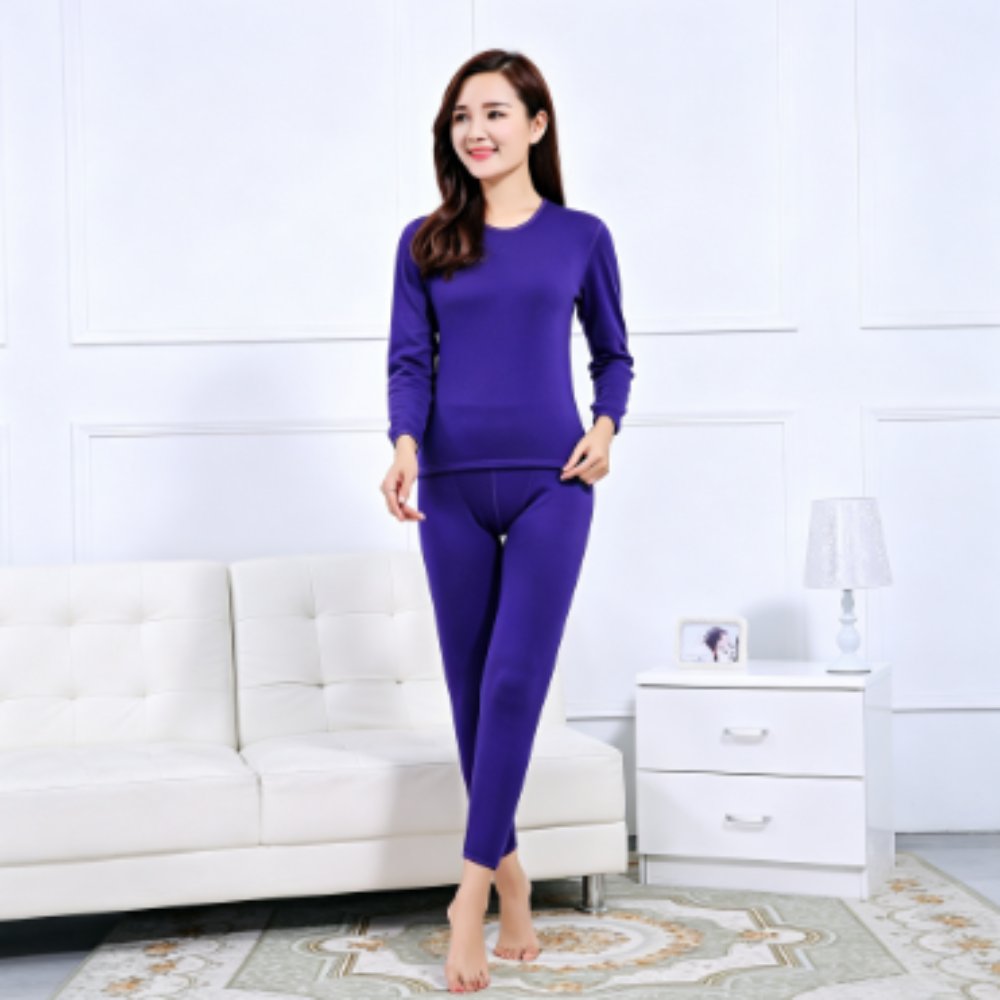
Use separate fields for a garment’s style reference, colour reference and physical sample identifier. Link those fields in an assortment sheet before asking for a quotation. A product number in a catalogue and a colour visible on a screen are useful starting references, but neither establishes a supplier’s confirmed variant code, stock availability or approved order assortment.
Keep the catalogue title as a reference
Nuanzai Xapparel lists Women’s Underwear 3 as a distinct catalogue page. Its product photograph shows a purple long-sleeve outfit. Use that exact link to open the enquiry, while asking the supplier which item reference it uses for the proposed supply. The number in the title should not automatically be treated as a colour code, a size code or an instruction to supply a particular number of garments.
Create a buyer reference that can remain stable while the supplier answers the enquiry. Keep the original page link beside it, then add the supplier’s confirmed item reference in another field. If the seller offers a related style instead, give that proposal a separate line. Do not overwrite the original request before your team has compared the difference and decided whether the substitution is acceptable.
Name the colour reference independently
A screen photograph helps identify the visual direction being discussed, but screen appearance is not a reproducible colour standard. Ask the supplier to identify the colour of the offered sample and explain whether it is a catalogue option or a proposed match to another reference. Record that answer beside the sample identifier. Avoid using one informal colour description to stand for several samples with different appearances.
When a physical reference is available, note who supplied it and how it is identified. Ask the supplier to connect its proposed sample to that reference rather than simply replying that the colour is similar. If your team compares samples under a particular lighting and background arrangement, record that arrangement as part of the review. Do not describe that practical check as a formal colour test unless one was actually performed.
Assortment field | Purpose | Confirmation needed
Buyer line ID | Keep the enquiry traceable | Use the same line in replies
Style reference | Identify the proposed garment | Supplier item or model reference
Colour reference | Identify the requested appearance | Offered shade reference
Sample ID | Connect the physical sample | Matching style and colour
Allocation | Describe the requested mix | Quantity basis for each line
Check the relationship between garments
A catalogue outfit may display a top and trousers together. That does not prove how the supplier identifies or sells those pieces. Ask whether the offered item is a paired set, an individual garment or another supply arrangement. If the pieces have separate style or colour references, preserve those references in the assortment sheet rather than combining them into a single undefined description.
A buyer may want the pieces to follow the same colour reference, or may have a different intended pairing. State that request clearly and ask the supplier what it can offer. Do not assume that apparently matching garments have identical material, shade or construction. Any required relationship between the pieces should be confirmed against the proposed samples, not inferred from the model’s appearance.
Make assortment changes explicit
For an assortment enquiry, identify how quantities are allocated across the requested lines. Leave any unknown availability or commercial terms pending until the supplier replies. A photograph of a colour does not establish that it can be supplied in the quantity, size distribution or delivery arrangement you intend to request. Ask for a line-by-line response rather than accepting an unqualified statement that the assortment is available.
If the supplier proposes a different shade or style, record the proposed replacement and the reason given. Keep the earlier line so the purchasing team can see what changed. A lower total price should not be compared with the original quotation until the assortment and supply basis have been reconciled. The objective is to make substitutions reviewable, not to make every proposal look identical.
• Keep style, colour and sample identifiers in separate columns.
• Ask how any pictured top and trousers are identified and supplied.
• Record proposed substitutes beside the original request.
• Confirm the allocation and quantity basis before approving the assortment.
Release only the fields actually approved
When your team accepts a sample, state which style and colour references were approved and which other fields remain unresolved. The approval should not silently confirm fibre content, skin comfort, warmth, care behaviour, certifications or market suitability. Those questions need their own requirements and evidence for the offered item. Catalogue wording and an attractive photograph cannot replace that work.
Before issuing an order, make sure the accepted sample identifiers appear against the same assortment lines used in the quotation. Check that no obsolete colour or substituted style remains in an attachment being treated as current. A clear reference map gives the buyer and supplier one understandable purchasing record without inventing variant codes or assuming that a catalogue display defines the whole order.
Frequently asked questions
Is the number in the product title a colour code?
Do not assume so. Preserve the catalogue title as a reference and ask the supplier to identify its actual style and colour codes for the proposed item.
Can one photograph approve an entire assortment?
Use it to identify the discussion. Approve each requested style and colour against clearly identified samples and record any proposed substitutions.
Does colour approval confirm other garment properties?
No. Keep dimensions, material identity, care requirements and any required evidence separate from the appearance and assortment decision.
Product and contact references
Catalogue reference: confirm matching item: https://nzxapparel.com/product/product-18/
Related catalogue reference: https://nzxapparel.com/product/product-19/
Contact Nuanzai Xapparel: https://nzxapparel.com/contact/
Nuanzai Xapparel blog: https://nzxapparel.com/blog/