
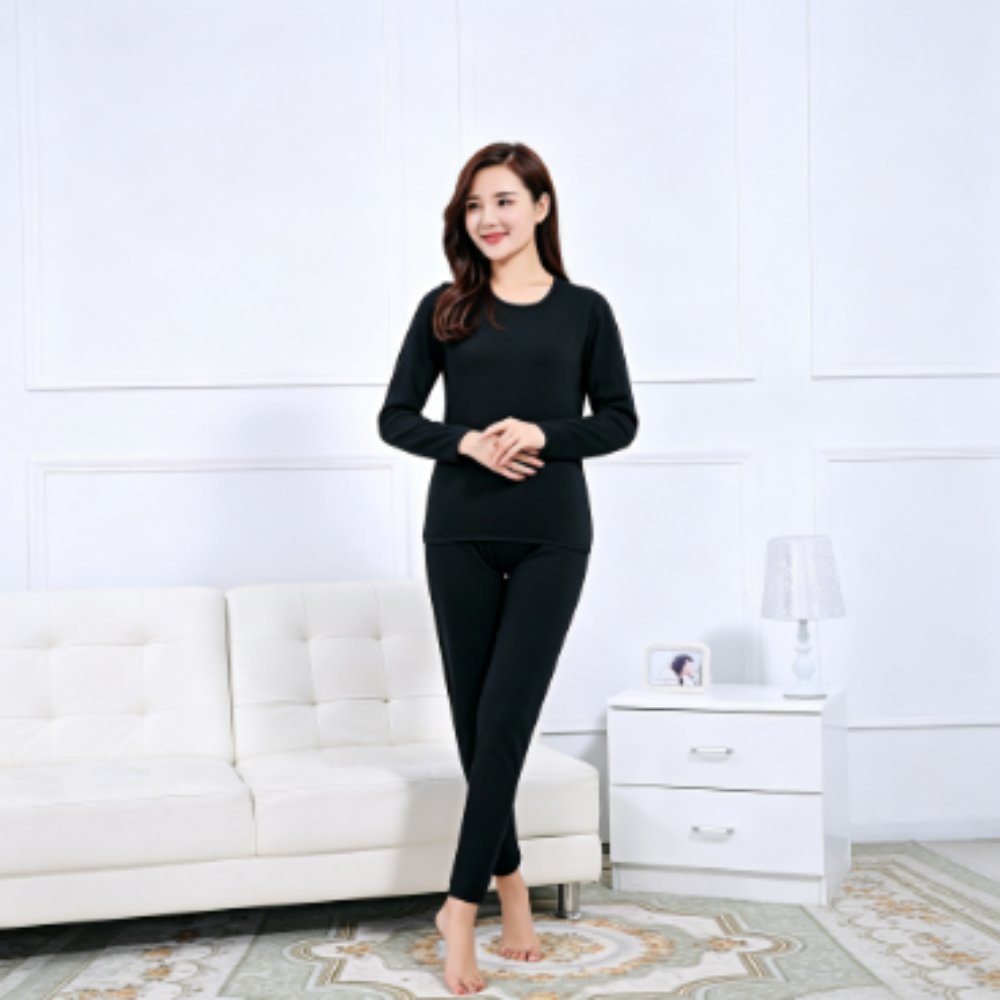
An underwear sample measurement record should identify the actual garment, show the points being measured and state how the sample was arranged. Ask the supplier to use that same reference when reporting its sample. A model photograph cannot establish a finished-garment measurement, a body-fit range or a material performance claim for the item you intend to order.
Identify the garment before writing a size
Nuanzai Xapparel’s Women’s Underwear 4 catalogue page links to a photograph of a black long-sleeve outfit. Use that page to identify the discussion, then ask which garments form the proposed supply. The pictured top and trousers do not automatically establish that both are included in one quoted unit. Give each garment that needs review its own sample reference before combining anything into a set description.
Record the supplier’s item reference separately from your internal reference. If the sample has a size label, copy the label as observed and ask the supplier to confirm what it means for that item. Do not replace a missing measurement with a familiar size name. The purpose of the record is to connect a proposed product to a reproducible review, rather than assume that size labels carry identical meanings across different garments.
Mark the start and end of each measurement
Use a simple annotated drawing to define every span that matters to the purchase. A request for length should say where the measurement starts and finishes. A width request should identify the garment area and whether the value describes a flat span or another basis. Ask the supplier to return the same drawing with its measurement notes, so your team can see whether it answered the question you actually asked.
The measurement list should suit the garment being offered. If a top is under review, identify the relevant top measurements. If trousers are also proposed, give them their own points instead of assuming that one record describes both pieces. Leave fields pending until the supplier confirms the sample. No measurements, tolerances or grading rules are supplied by the catalogue photograph itself.
Record field | Buyer reference | Supplier response
Garment identity | Exact page and sample ID | Offered item and included pieces
Label reference | Observed sample label | Meaning for this specific item
Measurement points | Annotated start and end positions | Result against the same drawing
Sample state | How the garment is arranged | Matching presentation used
Acceptance scope | Fields requiring agreement | Confirmed values and exceptions
Keep the sample state visible
State whether the sample is laid out for observation, supported or held in another specified condition. If your team needs a measurement with tension applied, describe that requirement and ask for an agreed method rather than instructing the supplier simply to stretch it. A stretched span and a relaxed span answer different questions. Neither should be silently substituted for the other in a quotation or approval note.
Photograph the sample arrangement and link the image to its identifier. This is a record of how the review was carried out, not a claim that a formal laboratory test occurred. If a particular tolerance or testing method is required, define it separately with the supplier. A visual review alone does not establish stretch recovery, warmth, durability, skin suitability or any other performance result.
Separate garment dimensions from body suitability
A finished-garment measurement and a recommendation about who should wear it are separate pieces of information. Do not infer a body-size range from the person shown in the catalogue image. Ask the supplier what sizing information it can provide for the offered item, and keep the source and scope of that information clear in your records. Any intended-market sizing decision still needs the buyer’s own requirements.
The product page includes a material statement, but that statement is not a measurement of the sample in your possession. If composition matters to the order, ask for confirmation linked to the offered item and any evidence required for your market. Keep that material question separate from the measurement sheet. An acceptable dimension does not validate an unconfirmed fibre declaration, care instruction or certification claim.
• Identify each garment and sample before recording its label or measurements.
• Use marked measurement points instead of relying on shorthand names alone.
• Record the sample state beside every measurement that depends on presentation.
• Keep sizing, material and performance questions separate from the dimensional review.
Approve a named revision
If the supplier changes the sample, label or measurement basis, issue a revised record. Preserve the earlier version and state which reference the new sample replaces. This prevents a corrected measurement from being attached to the wrong garment or an old approval from being reused for a different item. Ask the supplier to identify any differences that remain rather than marking the whole request accepted without qualification.
Before ordering, reconcile the sample identifier, measurement drawing, confirmed values and quoted supply. Make sure the purchasing team can distinguish approved fields from unanswered questions. This gives receiving staff a usable reference and gives the supplier a focused specification discussion without inventing dimensions or promising that a catalogue garment will fit a particular body.
Frequently asked questions
Can the catalogue model establish the right size?
No. Use the photograph to identify the item and ask for the offered sample’s measurements and sizing information. A model image is not a body-fit specification.
Should measurements be recorded relaxed or stretched?
Record the condition needed for the purchasing question and agree the method with the supplier. Do not mix different sample states without identifying them.
Does approving dimensions approve the material statement?
No. Keep material identity, required evidence and care information as separate fields. A dimensional review does not verify composition or performance.
Product and contact references
Catalogue reference: confirm matching item: https://nzxapparel.com/product/product-19/
Related catalogue reference: https://nzxapparel.com/products/
Contact Nuanzai Xapparel: https://nzxapparel.com/contact/
Nuanzai Xapparel blog: https://nzxapparel.com/blog/